Prostacyl Official Website › Blog › Pumpkin Seed
Pumpkin Seed: Why The Form On This Label Is The One That Failed
One trial, one year, 1,431 men, and two versions of the same seed tested side by side. One of them beat placebo. The other is the one in this capsule, at a tenth of the amount.
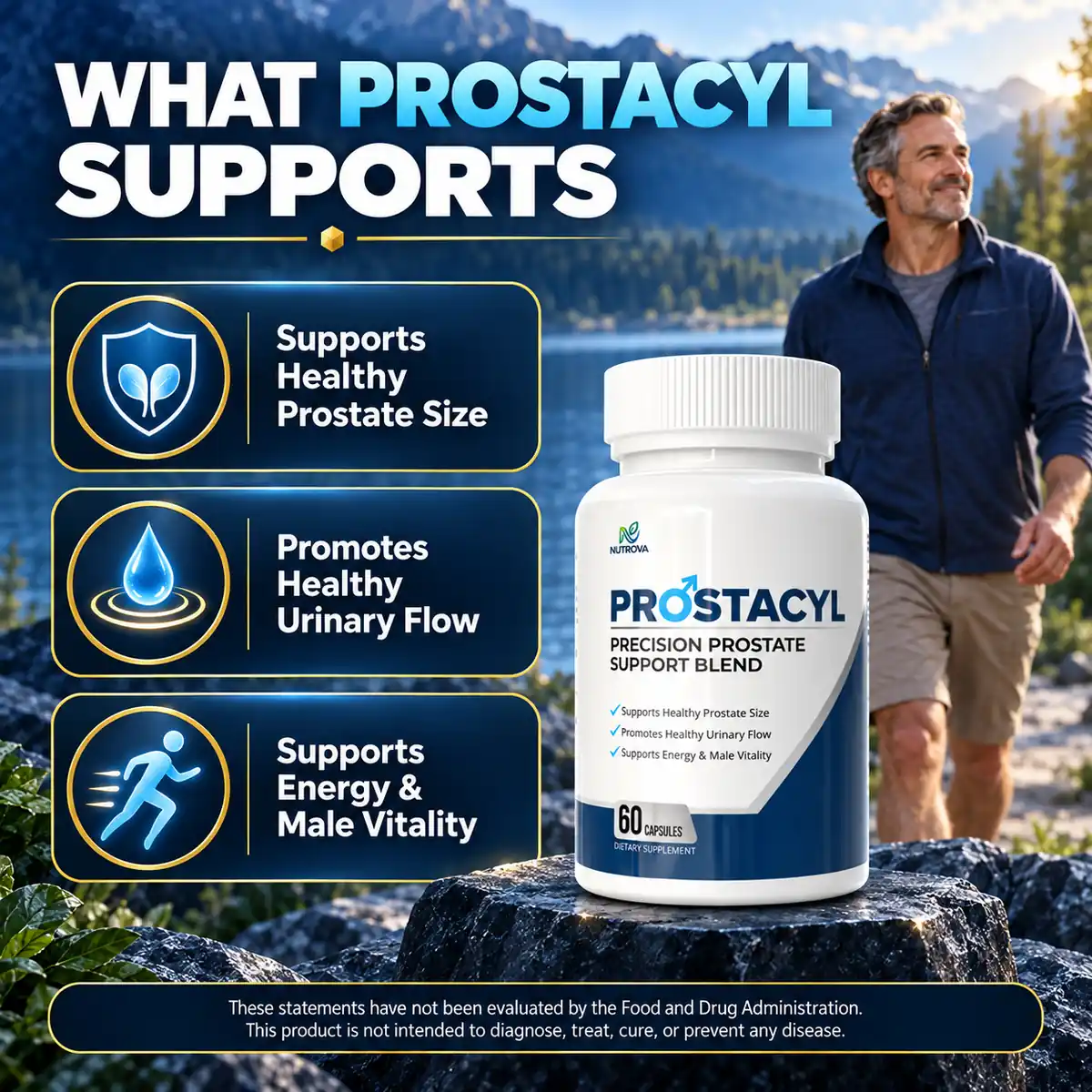
- GRANU ran for a year in 1,431 men and tested two different pumpkin seed preparations against their own placebos.
- Whole seed at 10 g a day produced 58.5% responders against 47.3% on placebo, and the authors described that finding as provisional.
- The extract arm, at 1,000 mg a day, did not differ from placebo at all.
- This panel carries 100 mg of pumpkin seed extract, which is a tenth of the arm that failed.
- A 47.3% placebo response is the other half of the story, and it explains a great deal about this whole category.
Three products out of one seed
A pumpkin seed reaches a shelf in three forms, and the three are not interchangeable:
- Whole seed, eaten as food and weighed in grams.
- Pressed oil, which carries the fat-soluble fraction and most of the sterols.
- A dried extract, concentrated from the seed and sold by the milligram in capsules.
The panel on this bottle says “Pumpkin Seed Extract (Cucurbita moschata) (seed)” at 100 mg, so it is the third of those. Naming the species and the part is good practice and makes the row checkable, which is the recurring virtue of this label.
Where it gets awkward is that the largest trial ever run on pumpkin seed and urinary symptoms tested two of those three forms at once, and reported different answers for each.
What GRANU set out to test
The GRANU study was published in 2015 and is the reason anyone takes pumpkin seed seriously in this category. It was randomised, placebo-controlled, ran for twelve months, and enrolled 1,431 men with lower urinary tract symptoms attributed to benign prostatic hyperplasia.
Those are unusual numbers for a botanical trial. Most of this literature is a few dozen men for eight weeks. GRANU is a year in more than a thousand, which makes its negative findings as informative as its positive one.
It used four arms: whole pumpkin seed at 5 g twice daily, a pumpkin seed extract at 500 mg twice daily, and a separate matched placebo for each. The primary outcome was the proportion of men whose symptom score fell by at least five points at twelve months.
The four arms, side by side
Laid out together, the trial answers two questions rather than one.
| Arm of the trial | What men took every day for a year | How it finished |
|---|---|---|
| Whole pumpkin seed | 10 g of seed, as 5 g twice daily | 58.5% of men met the responder definition |
| The placebo matched to it | A matching placebo | 47.3% of men met the same definition |
| Pumpkin seed extract | 1,000 mg of extract, as 500 mg twice daily | No different from its own placebo |
| The placebo matched to the extract | A matching placebo | The comparison that arm failed to beat |
| This label, for scale | 100 mg of pumpkin seed extract | A tenth of the extract arm, and never tested at this amount |
GRANU ran for twelve months in 1,431 men. A responder was a man whose urinary symptom score fell by at least five points. The trial’s own authors called the whole-seed result provisional.
The row that matters for this bottle is the third. The extract arm ran at ten times the amount on this panel, for a year, in a well-powered trial, and did not separate from its placebo.
The arm that worked, and the caveat its authors attached
The whole-seed arm did beat its placebo: 58.5 per cent of men reached the responder threshold against 47.3 per cent. That is an eleven-point difference in the proportion of responders, which is a real finding in a real trial.
It is also a finding the trial’s own authors declined to oversell. They described the result as provisional, and the reasons are visible in the design. The primary analysis was one comparison among several, the absolute difference in symptom score between the arms was modest, and a responder threshold is a blunter instrument than a continuous score.
Reporting the caveat alongside the number is not hedging. It is what the paper says, and a seller quoting the 58.5 per cent without it would be quoting half a sentence.
The arm that did not
The extract arm is the quieter result and the more important one here. At 1,000 mg a day for twelve months, pumpkin seed extract did not outperform its matched placebo.
That is not a small or inconclusive study failing to detect a small effect. It is the same trial, the same investigators, the same year, the same outcome definition and the same population, running the extract at a generous dose and finding nothing.
Three things follow, and none of them requires any interpretation:
- The evidence for pumpkin seed in this indication attaches to the whole seed, not to the extract.
- The one properly powered test of the extract form ran at 1,000 mg a day and was negative.
- Any capsule containing pumpkin seed extract is carrying the form that failed, whatever the amount.
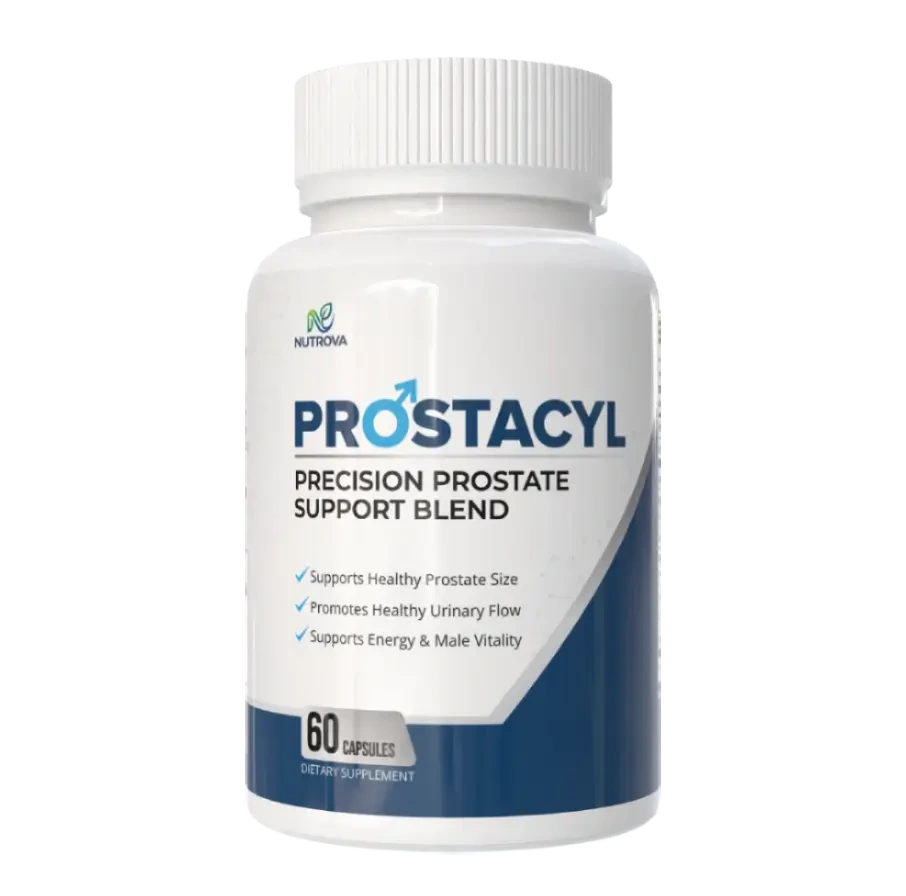
Every Prostacyl amount is printed, including this one
Nine actives, nine numbers, no proprietary blend, which is how a row like this one can be checked at all. Two capsules a day and 60 days from purchase to change your mind.
One bottle $69 · six bottles $294 · 60-day money-back guarantee
Order Prostacyl On The Official WebsiteTwo capsules a day · 60 per bottle · lot PRO-26/GE-3008
100 mg against 1,000 mg against 10,000 mg
The arithmetic is worth seeing in a column, because the three numbers span two orders of magnitude and the eye slides over that in prose.
| Form and amount | Milligrams a day | Against this label’s 100 mg |
|---|---|---|
| Whole seed, the arm that beat placebo | 10,000 mg | One hundred times larger |
| Extract, the arm that did not | 1,000 mg | Ten times larger |
| This panel’s pumpkin seed extract | 100 mg | The row as printed |
| A handful of pumpkin seeds | Roughly 30 g, or 30,000 mg | Three times the whole-seed arm, from a bag |
Arithmetic on the published amounts. The last row is there to give the whole-seed dose a physical size rather than to recommend a diet.
A tenth of a dose that did not work is a difficult position to argue from. If 1,000 mg of extract made no difference across a year in a comparison of several hundred men, there is no published basis for expecting 100 mg to do more.
The counter-argument a seller might offer is that this is a nine-ingredient formula and no single row is meant to carry it alone. That is fair as far as it goes, and it is why the mechanism page groups the panel into three pathways rather than nine separate promises. It is not a reason to read this row as active.
What 10 g of seed looks like on a plate
The arm that worked is worth making physical, because it is unusually easy to act on.
Ten grams of pumpkin seeds is about a heaped tablespoon, or roughly a third of a small supermarket bag. It costs a few pounds a month, needs no capsule, and was the intervention that produced the only positive result in the largest trial in this literature.
Most people will not do it every day for a year, which is the honest reason capsules exist. But anyone deciding between a formula and a bag of seeds on the strength of the pumpkin evidence alone should know which of the two the evidence actually supports.
The other pumpkin seed literature
GRANU is not quite the whole record. A small 2014 comparison set pumpkin seed oil against prazosin, a prescription alpha-blocker, in men with symptomatic benign prostatic hyperplasia.
It is worth reading and it is not worth leaning on:
- The trial was small, in a literature that already contains a 1,431-man study.
- It compared against an active drug rather than a placebo, which answers a different question.
- It tested pressed oil rather than a dried extract, so it is not about the form on this panel either.
It does illustrate a pattern that runs through this whole category: the encouraging results tend to be small and the large trials tend to be null. The exception on this panel is pygeum, where a meta-analysis of eighteen trials in 1,562 men found roughly double the rate of reported improvement, and where this label puts 200 mg against a researched 100 mg.
Why the placebo arm is the most useful number in the trial
Forty-seven point three per cent of men on a matched placebo reached the same responder threshold over the same twelve months. Nearly half. That figure explains more about this shelf than any active result on it.
Urinary symptoms fluctuate. They respond to fluid timing, to caffeine, to alcohol, to how late in the evening the last drink was, to sleep, to the weather and to whether a man is paying attention to them. Enrol a thousand men in a trial, ask them to think about their symptoms every month for a year, and a large fraction will improve whatever is in the capsule.
That is also why the American Urological Association’s guideline puts a structured symptom score at the front of the initial work-up. A number taken twice is the only way anyone, in a trial or at home, can tell a real change from an ordinary swing.
Three habits follow from a 47 per cent placebo response, and they cost nothing:
- Count night-time trips for a week before you start anything, and for a week two months later. Memory is not evidence.
- Change one thing at a time. A new capsule and a new bedtime in the same week answer nothing.
- Expect the first fortnight to feel encouraging whatever you take, because in trials it usually does.
Where that leaves one row of nine
Pumpkin seed extract at 100 mg is the weakest-supported botanical amount on this panel, and the reason is not secrecy. The number is printed. The species is printed. The plant part is printed. Everything needed to reach this conclusion came off the bottle itself.
The fair summary is that this row is unlikely to be doing much, that a tenth of a failed dose is a hard position to defend, and that the case for this formula rests on other rows entirely. The supplement facts page reproduces all nine so the same exercise can be done on each of them, and the pricing page sets out what the packs cost a day.
A label that printed one combined total for its botanicals would have left nothing here to check at all, and that is worth saying as plainly as the criticism.
Three structure and function statements are printed on this bottle, and they are the furthest any seller may go: healthy prostate size, healthy urinary flow, energy and male vitality. Prostacyl is a dietary supplement for healthy men aged 18 and over. It has no FDA approval and it treats nothing.
References
- Vahlensieck W, Theurer C, Pfitzer E, et al. Effects of pumpkin seed in men with lower urinary tract symptoms due to benign prostatic hyperplasia in the one-year, randomized, placebo-controlled GRANU study. Urol Int. 2015;94(3):286-95. PMID 25196580. https://pubmed.ncbi.nlm.nih.gov/25196580/
- Shirvan MK, Mahboob MR, Masuminia M, et al. Pumpkin seed oil (prostafit) or prazosin? Which one is better in the treatment of symptomatic benign prostatic hyperplasia. J Pak Med Assoc. 2014;64(6):683-5. PMID 25252490. https://pubmed.ncbi.nlm.nih.gov/25252490/
- Ishani A, MacDonald R, Nelson D, et al. Pygeum africanum for the treatment of patients with benign prostatic hyperplasia: a systematic review and quantitative meta-analysis. Am J Med. 2000;109(8):654-64. PMID 11099686. https://pubmed.ncbi.nlm.nih.gov/11099686/
- Lerner LB, McVary KT, Barry MJ, et al. Management of Lower Urinary Tract Symptoms Attributed to Benign Prostatic Hyperplasia: AUA Guideline Part I - Initial Work-up and Medical Management. J Urol. 2021;206(4):806-817. PMID 34384237. https://pubmed.ncbi.nlm.nih.gov/34384237/